For families
A horn in the park, a thumb in the museum, and a mine under a Belgian town
A gentle path through the official story, with the surprising bits left surprising, and no invented numbers to make it tidier.
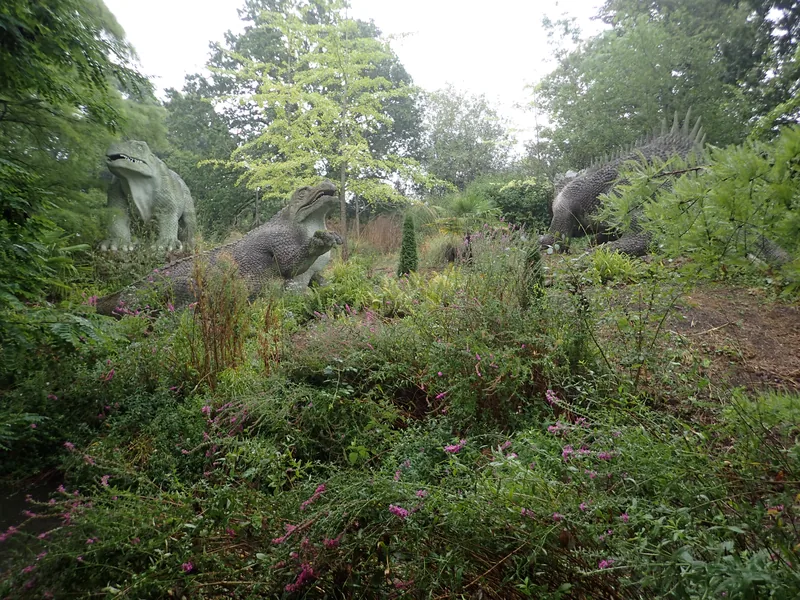
If you have been to Crystal Palace Park, you have already met Iguanodon as many Victorian visitors met it: with a spike on the nose. That is not a mistake in the park’s housekeeping. The Natural History Museum says the horn “was still a prevailing theory” when the sculptures were planned in the 1850s. Scientists even had dinner inside the sculpture before the work was completed in 1853. [source] The animals in the park have been standing there since the 1850s. That is a long time to wait for a birthday, if you want one.
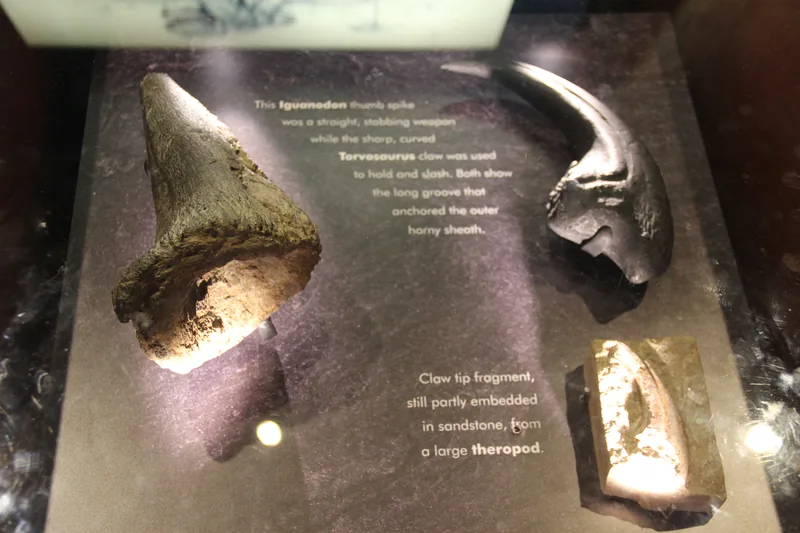
The later official story is just as good, and it is slightly stranger. In the 1870s it was proved that the spikes were thumbs, not horns. Fossils show the bony core. In life the spikes “would have been covered in keratin.” The hand had other jobs too: a hoof for walking, and a fifth finger that may have grasped. [source] Different official pages describe the thumb’s use in different words — probably to fend off predators, food preparation or defence, a devastating weapon — and this desk tells children and adults the same thing: those are several official sentences, not a single invented job.
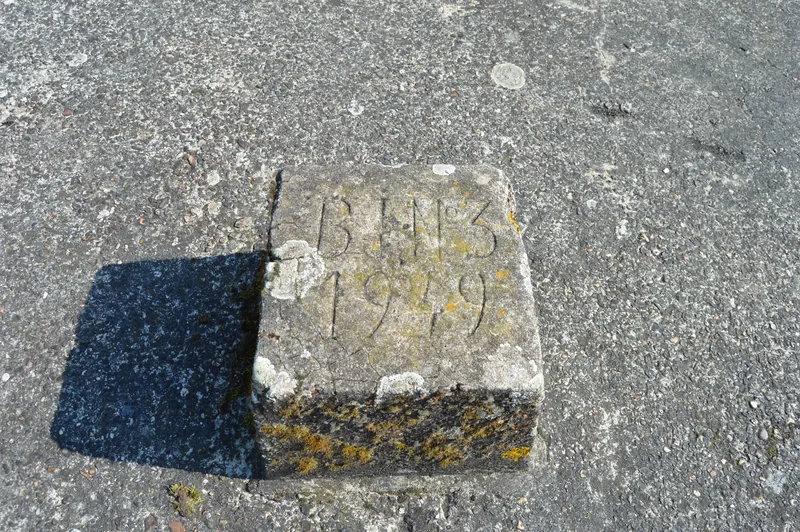
The complete skeletons came from a coal mine at Bernissart in Belgium, 322 metres down. Official pages say March 1878, or the end of March, or April, and this desk does not pretend those months are one month. There were thirty relatively complete skeletons, or around thirty, depending on which official page you are reading. They were packed in 600 blocks, taken to Brussels, and stood up on two legs in 1882. Museums later said the animal predominantly walked on all fours, but the old mounts are too fragile to move. [source] [source] That is a good family lesson on its own: a museum can change its mind, and still keep the history of the first guess standing in the hall.
The beginning of the story is smaller than a mine. It is a collection of teeth in Sussex, discovered in 1822 and named in 1825, because they looked like an iguana’s teeth, only much larger. “Most accounts hold” that Mary Ann Mantell saw something glinting by the road. [source] You can say that sentence at a kitchen table without turning it into a certainty. The typographic fact sheets — On the nose, or on the thumb? (A4) · Letter, The teeth that started it (A4) · Letter, and The Bernissart Iguanodons (A4) · Letter — have no photographs inside, and they keep the same official wording.
Enjoyed this desk on a horn that became a thumb, and a mine full of Iguanodons?
No pop-ups. No intrusive advertising. Just interesting stuff. A little support helps the next dinosaurs.im site get built.