Discoveries
Things Iguanodon still does to a first look
A roadside glint that comes with a hedge, a horn that later became a thumb, and a coal mine whose official month is written twice.
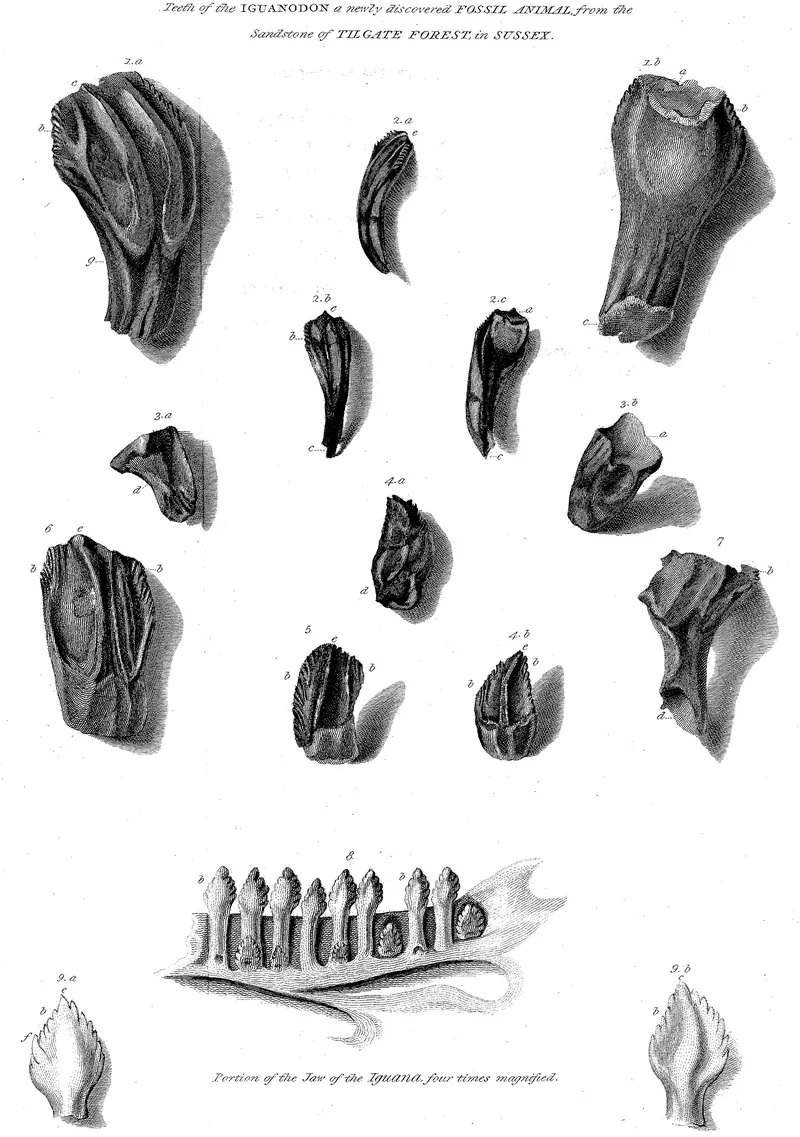
Most accounts hold
The museum could have told the Sussex story as a settled anecdote. It does not. “Most accounts hold that Mary was accompanying her husband on a trip to visit a patient in Sussex, when she noticed something glinting by the side of the road.” [source] The discovery is official. The hedge is official too. That is the first surprise.
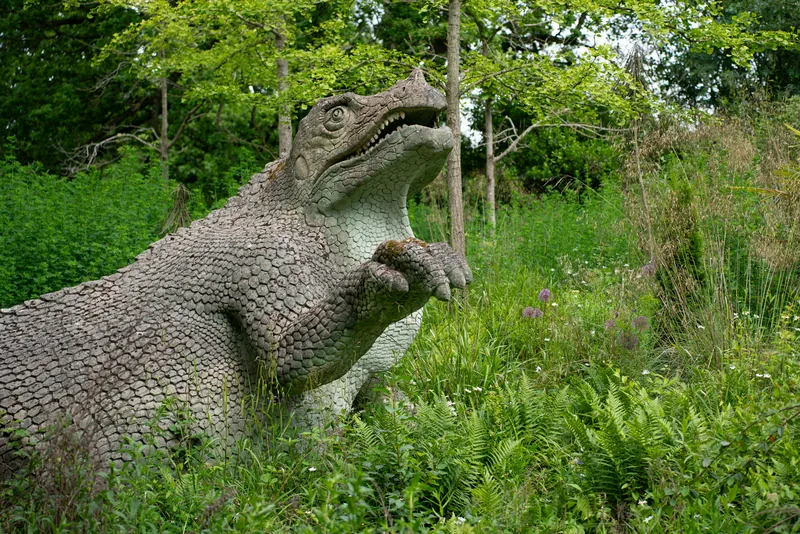
The face in the park is an older idea
The Crystal Palace Iguanodons still wear a horn, because that “was still a prevailing theory when Owen consulted” in the 1850s. “It wasn’t until a significant Iguanodon discovery was made in the 1870s that it was proved that the spikes were thumbs rather than horns.” [source] A first look in the park is a look at the 1850s. The later anatomy is a second look.
The mine has more than one official month
The Natural History Museum dates a chance discovery in March 1878. The Belgian glance page starts “at the end of March 1878” and dates the telegram 12 April. The masterpiece page dates the first bones to April 1878. [source] [source] [source] A reader who wants one month will have to choose a page first. That, too, is a discovery, and it is left intact in the field notes.
The mounts cannot follow the later gait
“We now know the dinosaur predominantly walked on all fours.” The Belgian Iguanodons “are now too fragile to be repositioned,” and “remain a vestige of nineteenth-century thinking.” [source] A masterpiece page still says the posture is “debated.” The skeletons in the hall are both a discovery and a record of an older pose.
Enjoyed this desk on a horn that became a thumb, and a mine full of Iguanodons?
No pop-ups. No intrusive advertising. Just interesting stuff. A little support helps the next dinosaurs.im site get built.