Credits
Every photograph on this site
Licences were checked on each Wikimedia Commons file page on 18 November 2026. CC BY stills are used on the website and credited; they are not placed in the typographic PDFs. CC BY-SA stills are used on the website only, and are not placed in the downloadable fact sheets.
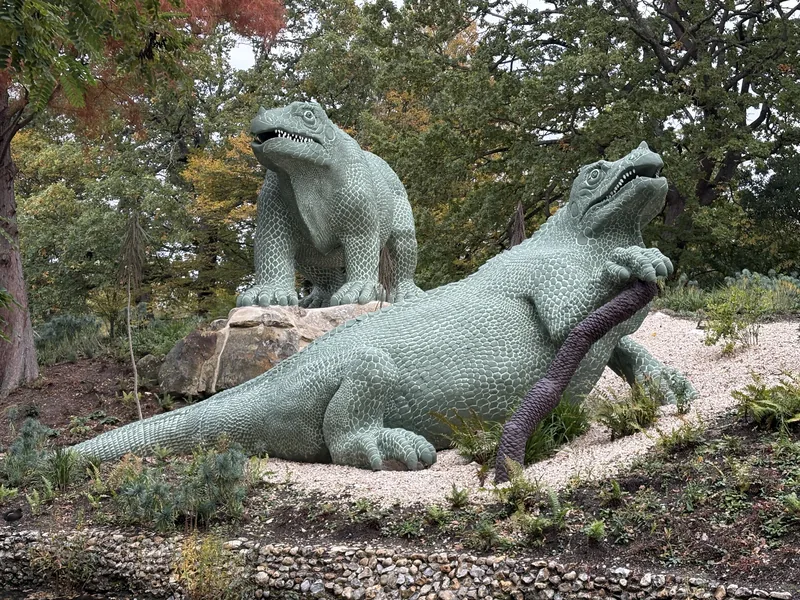
Two Iguanodon sculptures in Crystal Palace Park, photographed by A Cynical Idealist on 4 November 2026. The photographer’s description calls them anachronistic sculptures of the ornithopod Iguanodon, after being restored in 2026. CC BY 4.0. Photo: A Cynical Idealist · CC BY 4.0 · A Cynical Idealist 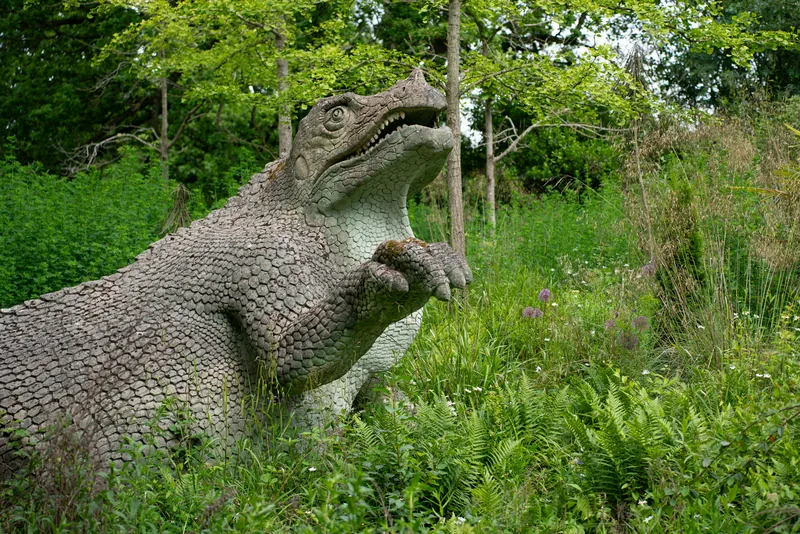
A Crystal Palace Iguanodon, photographed by Tom Page on 8 June 2024. The spike sits on the nose, as it did when the horn was still a prevailing theory. CC BY-SA 2.0, used on the website only, and not placed in the typographic fact sheets. Photo: Tom Page · CC BY-SA 2.0 · Tom Page 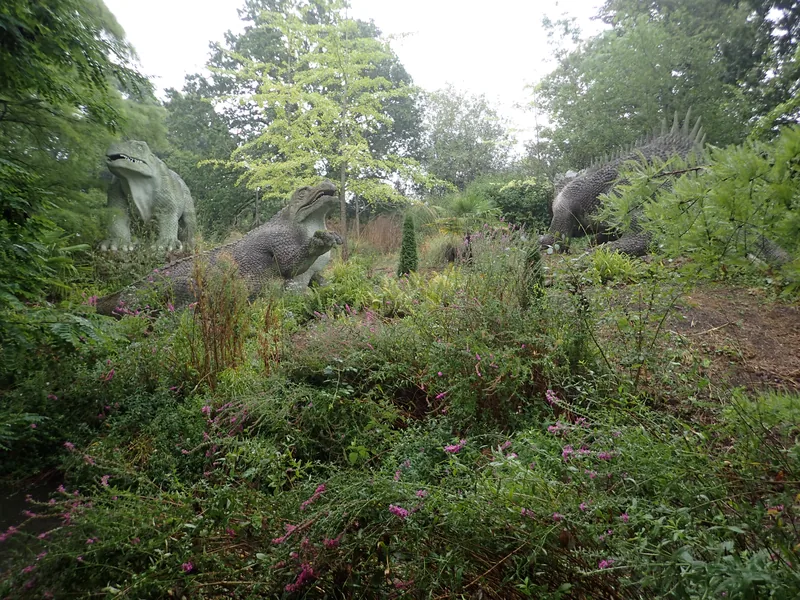
The Iguanodon sculptures at Crystal Palace, photographed by Marathon on 6 September 2024. A park view from the year before the 2026 restoration photograph on this desk. CC BY-SA 2.0, used on the website only, and not placed in the typographic fact sheets. Photo: Marathon · CC BY-SA 2.0 · Marathon 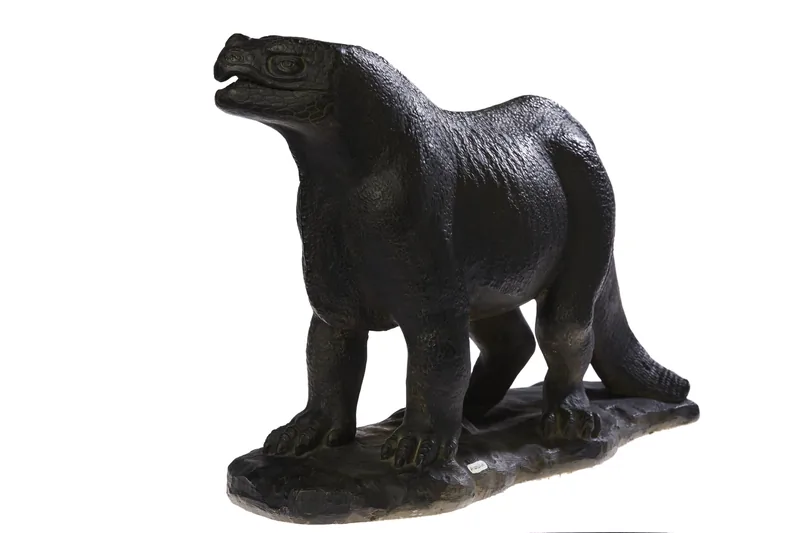
A one-twelfth scale model of the first Iguanodon sculpture, photographed by Rodney Start for Museums Victoria. The Commons file labels the work 1854 and says the original was revealed in 1854 in Crystal Palace Park. The Natural History Museum dates a dinner “prior to the completion of the Crystal Palace dinosaurs in 1853.” Those two wordings are kept apart. CC BY 4.0. Photo: Rodney Start / Museums Victoria · CC BY 4.0 · Rodney Start / Museums Victoria 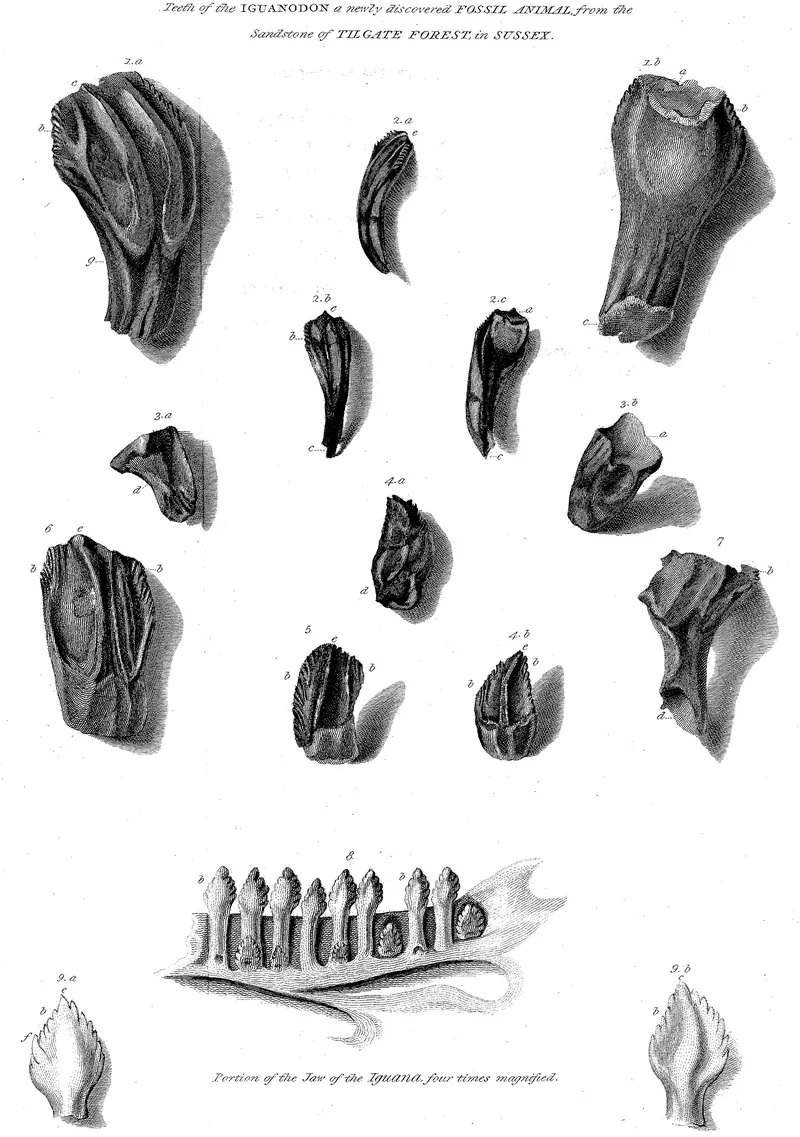
Illustration of the original Iguanodon teeth by Gideon Mantell, 1825. Public domain. The museum’s later search article dates the formal naming to 1825. Plate: Gideon Mantell · Public domain · Gideon Mantell 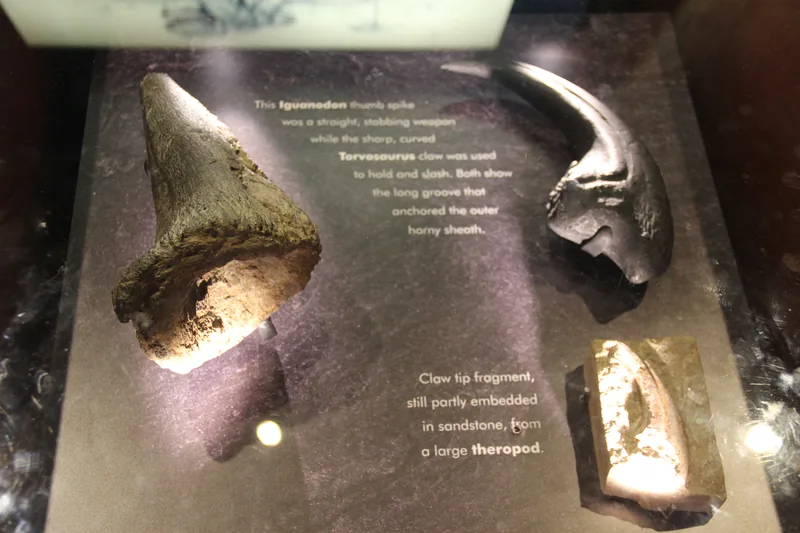
Iguanodon thumb spikes at the Natural History Museum, London, photographed by Gary Todd on 2 August 2017. The fossils show the bony core. The museum says the spikes would have been covered in keratin. CC0. Photo: Gary Todd · CC0 · Gary Todd 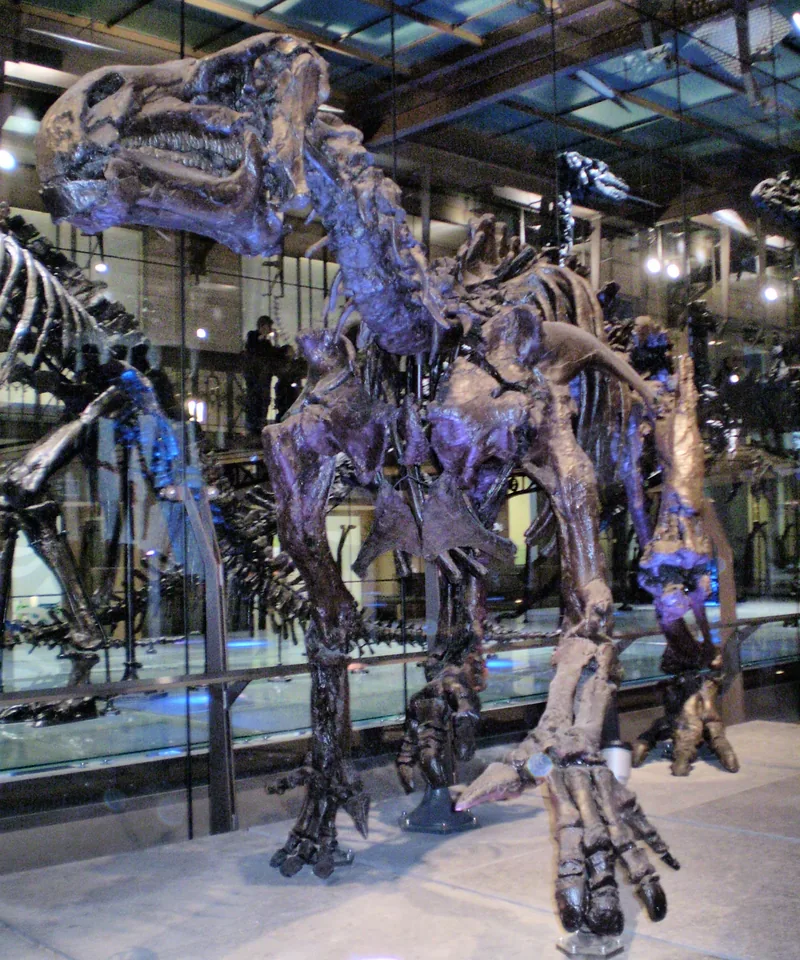
Iguanodon bernissartensis presented in a quadrupedal pose at the Royal Belgian Institute of Natural Sciences, Brussels, photographed by Ben2 on 7 November 2007. The thumb spike is visible on the hand. CC BY-SA 3.0, used on the website only, and not placed in the typographic fact sheets. Photo: Ben2 · CC BY-SA 3.0 · Ben2 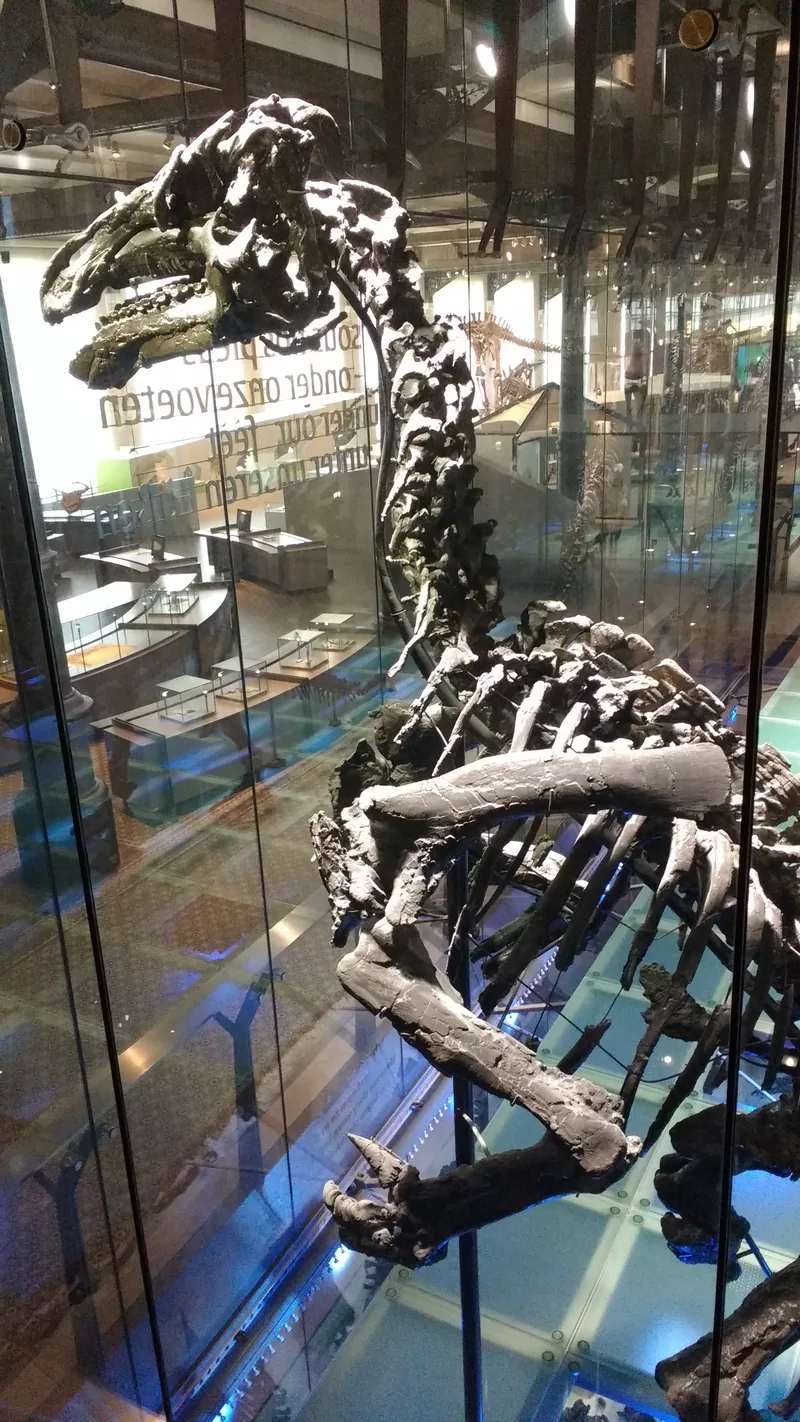
An Iguanodon in the Royal Belgian Institute of Natural Sciences, Brussels, photographed by Fernando Losada Rodríguez on 14 August 2016. A modern gallery view of a standing mount. CC BY-SA 4.0, used on the website only, and not placed in the typographic fact sheets. Photo: Fernando Losada Rodríguez · CC BY-SA 4.0 · Fernando Losada Rodríguez 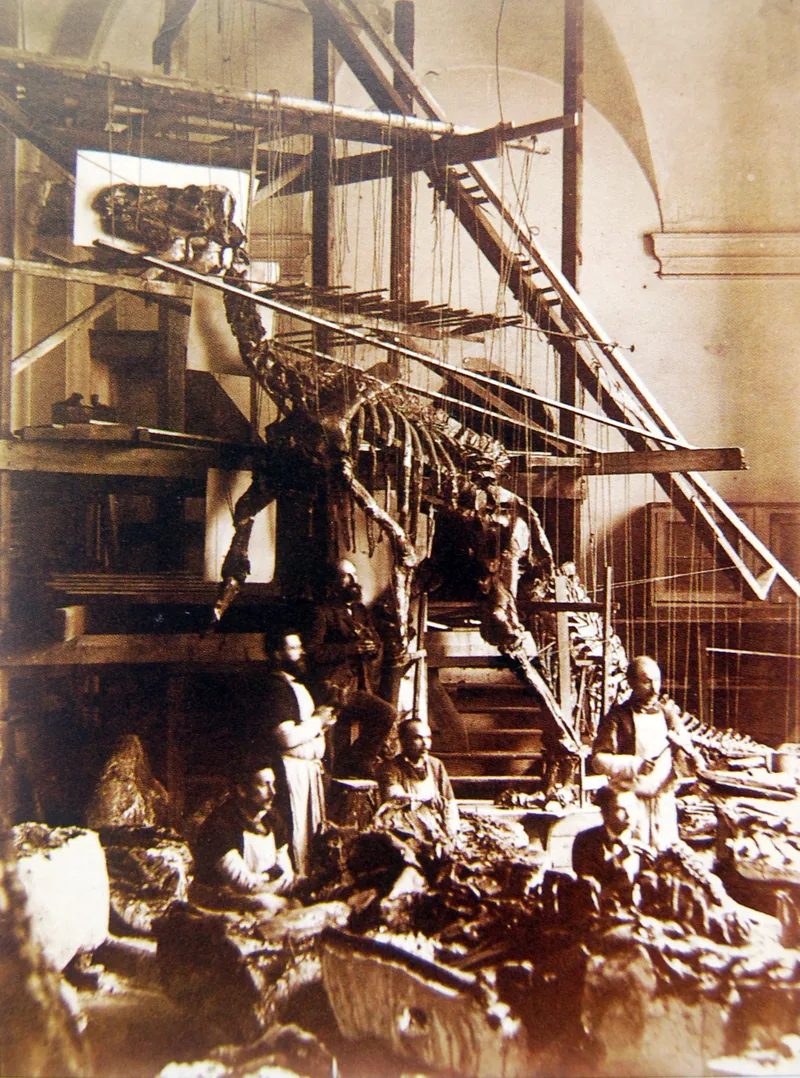
Workmen mounting the first Iguanodon bernissartensis skeleton in the St George Chapel in Brussels, 1882, photographed by Aimé Rutot. The original is 956 pixels wide and is not upscaled here. Public domain. Photograph: Aimé Rutot · Public domain · Aimé Rutot 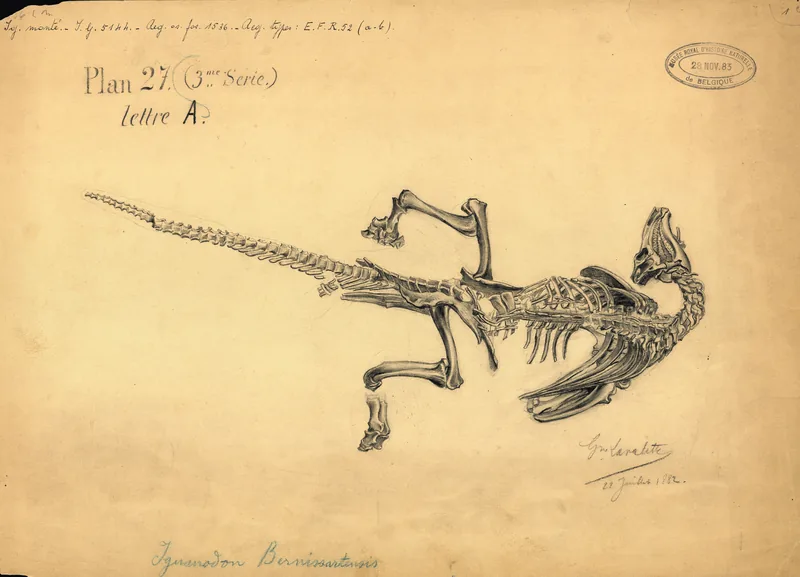
Iguanodon bernissartensis “lettre A,” drawn by Gustave Lavalette on 22 July 1882, as the animal was discovered. Public domain. Drawing: Gustave Lavalette · Public domain · Gustave Lavalette 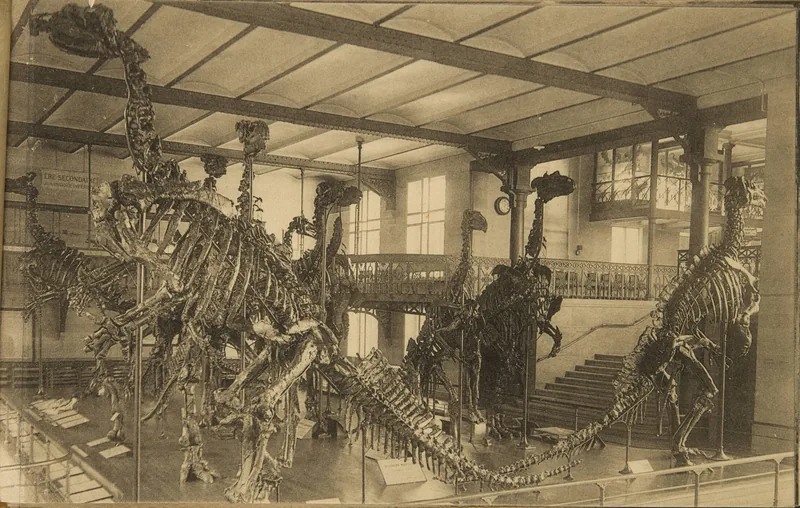
A historic general view of the mounted Iguanodon group “in the attitude of life,” in the vertebrate hall of the Royal Museum of Natural History, Brussels. The Commons file does not identify the photographer or a publication date. Public domain. Photograph: Unknown author · Public domain · Unknown author 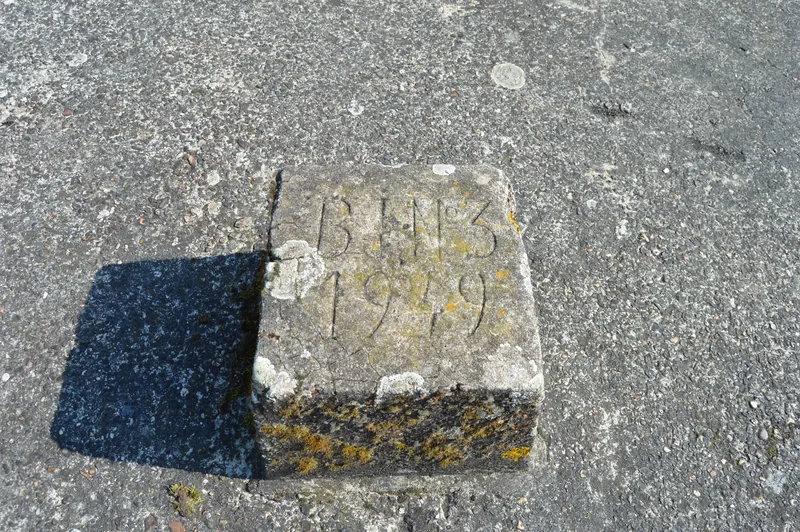
The former Sainte-Barbe pit 3 of the coal mine in Bernissart, Belgium, photographed by Bel Adone on 27 March 2013. The Natural History Museum and the Belgian institute date the 1878 discovery to this mine, at 322 metres. A file caption’s word “herd” is not used as official wording here. Public domain. Photo: Bel Adone · Public domain · Bel Adone
Enjoyed this desk on a horn that became a thumb, and a mine full of Iguanodons?
No pop-ups. No intrusive advertising. Just interesting stuff. A little support helps the next dinosaurs.im site get built.